


Ittō Tenshin-ryū®
Yamate-ryū®
Goseki-ryū®
Taseki Publications
The primary aim of our traditions is the realization of an orderly, unfettered, and powerful being—and then to do something meaningful with that capacity.


Blog: Simple Things Matter
Original articles, videos, and more

This article is for the leader who has ever looked back on a decision, conversation, or conflict and realized the problem was not a lack of intelligence. It was that pressure had taken the wheel.
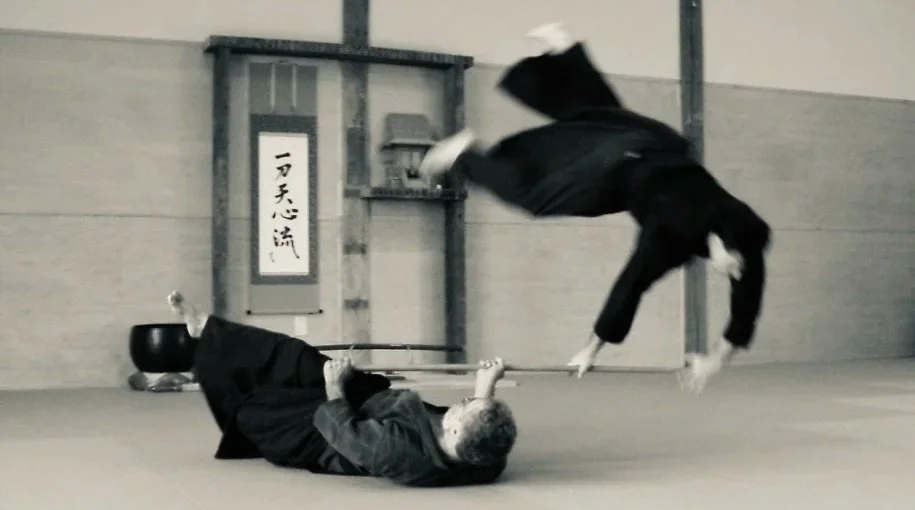
On the first weekend of May in 2026, the deshi of the Yamate-ryū gathered in Chicago as the guests of Mr. Ritacco and Dr. Musicar for an intense weekend of discovery and experimentation with hanasu. Mr. Simms later informed me that this Taikai was more difficult to prepare than most. It has taken me weeks of reflection to digest the lessons and synthesize this retrospective. For a simple concept, this was a tough one.

"The old masters," he said slowly, "were physically gentle. A block might be soft, physically. But the spirit was strong. The strength of the traditionalist is developed inside, spiritually, rather than outside simply as trained muscle."

This is Shōhatsutō (初発刀), the first kata of the Gokyō within the Kihon Iaidō of Ittō Tenshin-ryū.
Now comes tricky part—put those answers succinctly into words. Compose a concise, impactful statement that captures your answers to the questions above in a way that someone would have at least a bit of insight into what you do and, ideally, have some curiosity to learn more about your tradition.
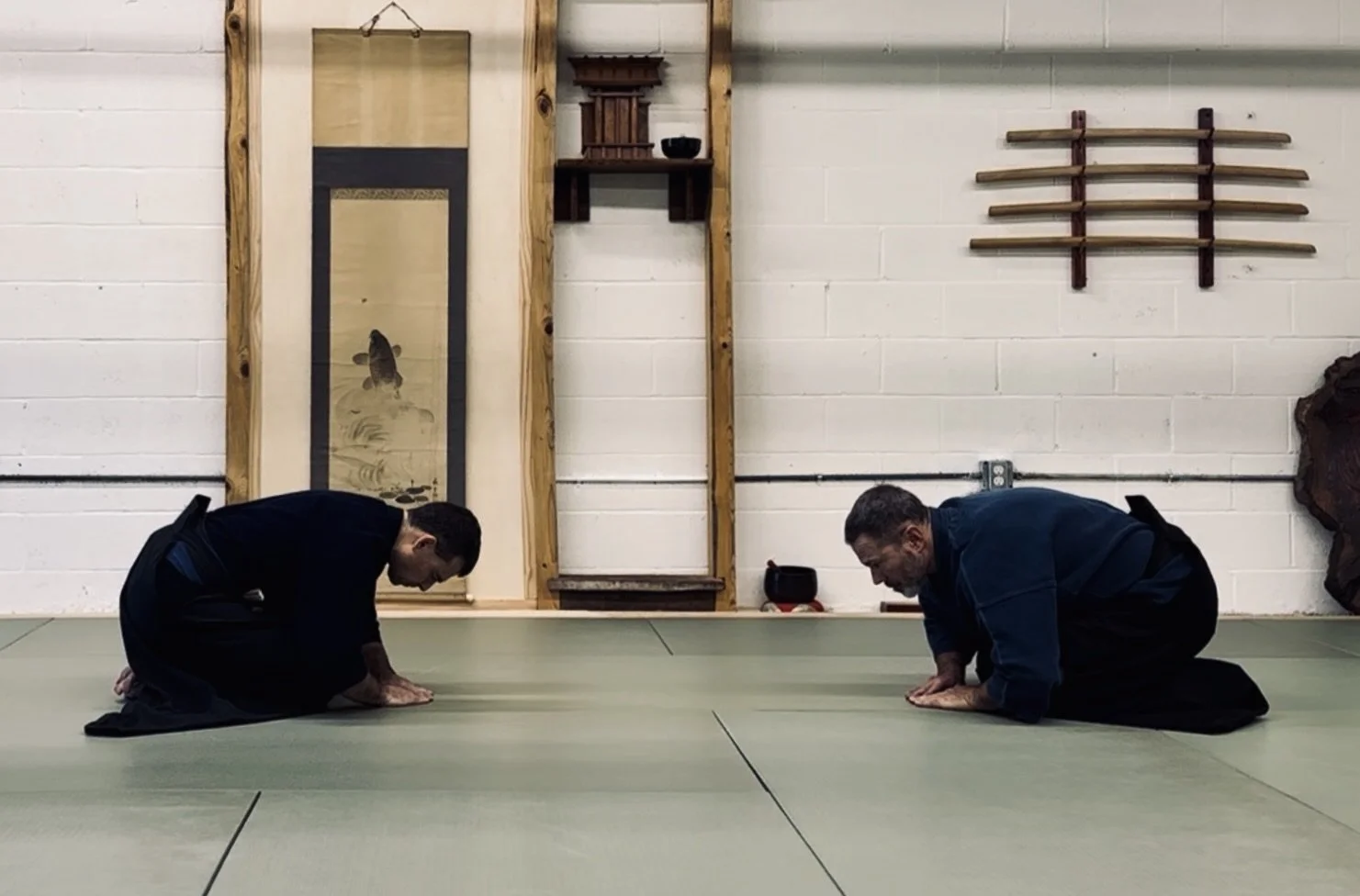
Recently I came across this quote:
“A practitioner who ignores reishiki is not merely rude; they are unreliable.”
The hairs on the back of my neck stood up.

To preserve the integrity of the Ittō Tenshin-ryū, Yamate-ryū, and Goseki-ryū, it is fitting to declare where, and from whom, authentic instruction in these traditions may rightly be obtained.

In our traditions, when a deshi receives a certificate in recognition of what they have done, and perhaps what they are capable of being, they are guided to observe it, celebrate the accomplishment, and then place it in their sock drawer.

Existing within our Traditions is unbelievably challenging. They require a level of personal accountability and introspection that is quite intense, not for days and weeks, but for years and decades – for a lifetime. They are more than a bag of physical techniques. They are more than just cutting, throwing, breathing, walking, or sitting; more than Shohatsutō or Ude-osae. They are a way of living, a method that pervades the inmost recesses to improve the Core You, and to forge that thing into something that each day, hopefully, has one less gap than the day before.

The Japanese educational methods and means, tested and applied for centuries, were well understood and fully developed when Japan was still in a period of constant internecine warfare. Today there is no mystery about how to go about this form of training. The real problem is having access to an authentic tradition. This is only found in a true teacher: there is no other repository but a living master.

For six days we explored aspects of each ryū, beginning at 8 am with Zen keiko, and then taking two hours each for Itto-tenshin ryū, Yamate-ryū, and Goseki-ryū. We finished in the evening and enjoyed a home-cooked meal, a cigar, and each other’s company. Each ryū has a different flavor, but the combination brought us closer to the essence of what we do than any keiko I have had to date.

The human, the tool, the environment and the act itself are the four domains of mastering an endeavor. By mastering the human condition, and applying this across multiple skill sets, you reduce the workload.
In a traditional Dōjō we operate in such a way as to test the limits of power beyond what is reasonable. My Instructor requires the class to walk past him without stopping or changing pace. As I pass him his arm blocks my path at chest height. He outweighs me by fifty pounds, and it’s all solid muscle. I feel as if I’ve hit a wall.

One thing that stands out about a sword is sori. And if it's a good sword, it is also beautiful. But why?

While there is new science around this idea, it is not unfamiliar to practitioners in Budō. Traditional terms-of-art like Mind and Void depict a strikingly similar view, and the physical teachings of the Itto Tenshin-ryu convey otherwise inexplicable truths: the Way that can be spoken is not the Way.

The Ittō Tenshin-ryū is a powerful tradition!
Its unwavering purpose has informed deshi since its inception. While the words pointing to essence may change from time to time, the development of a powerful and orderly being remains.

Yamate-ryū aikijutsu makes use of numerous weapons in its curriculum. These include bokken, shōtō (wakizashi), tantō, and jō. Other weapons may also be used occasionally. It is important to understand why we use weapons in our training and how they impact the techniques we teach. Although many aiki arts treat weapon training purely as a way to improve their empty-handed techniques, in Yamate-ryū the weapons are integral to our art’s modern application, not just our history.

Our traditions are alive, moving through time and space, offering deshi the opportunity to discover for themselves; essence. While teaching a technique may be organized, transmitting a way of being cannot.

The Bujin VOL 2 NO 2 August 1978. Includes: Editorial, Budo (part 2) by C.M. Kotlan, Shiai by Sherry O’Sullivan, Uncle Sam's Swords by Fred Tart, Dojo Tales, Readers Questions, Kenjutsu: "Tips from the Pros" by J. Ostrowski, Kata, Nippon-To The Japanese Sword, Illustration by J. Ostrowski, How to Tie a Sword Bag Cord, Kanji.

The Bujin VOL 2 NO 1 July 1978. Includes: The Duel by Sherry O’Sullivan, Sageo, Reader’s Questions, Dojo Tales, Budo by C.M. Kotlan, Characteristics of the Japanese Sword, Kanji.

Look left, look right, look in front, and look behind. You are not alone. You are a member of the Ryū, a timeless, spaceless, entity that extends forever. You are raw potential and the Ryū is the hammer forging you.

Yamate-ryū Aikijutsu is not simply a collection waza, but a way of developing spirit and the impact of that on another. It is raw potential and the perception thereof. Surrender, then service.

While the majority of techniques from the Ittō Tenshin-ryū® are what you might expect from a school of kenjutsu, there is one group of kata that most newcomers to the art find frightening, foreign, and fascinating: Gekken, the “Severe Sword.”
Future Events
-
The annual Yamate-ryū Taikai will be hosted by Daiseki and Gorin no Dōjō in Chicago, Illinois.
Mr. Schutz, believing that he must not ask his student to do what he has not already done, did Sanchin, ran the length of the pier in jodan, and hurled himself off the end and into the 6' deep water. No hesitation. No concern. No life preserver. No safety rope. Sensei had chosen to go to war with nature, and had taken me with him.